

Securing lift shaft walls a challenging task
In Stigbergsparken on Södermalm, work is under way to install a support structure for the lift shaft to be built for the new Sofia metro station. The support structure will act as a protective wall around the shaft to prevent the surrounding soil from collapsing and to prevent any change in the groundwater level.
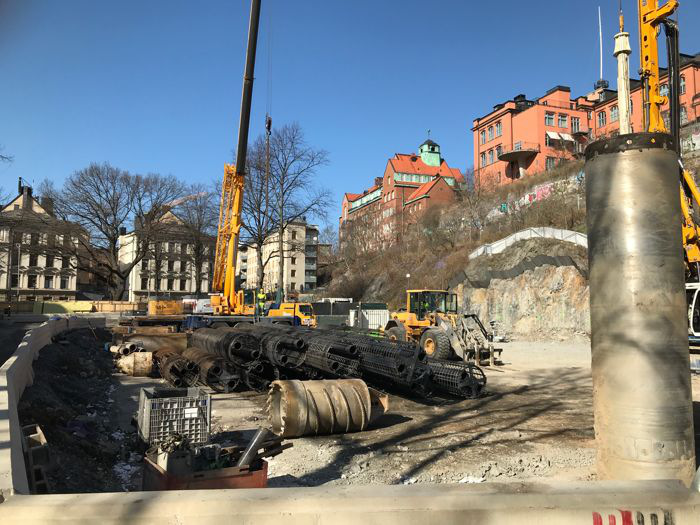
The support structure is comprised of so-called secant piles, which are overlapping piles cast in situ to form a watertight wall.
“This task involves several challenges. On the one hand, the bedrock slopes, and on the other hand, there are large boulders in the ground that take time to bore through. However, drilling and casting the secant pile wall is a necessary part of the construction of the lift shaft for Sofia station,” says Johanna Nilsson, the geo-construction manager for Stigbergsparken.
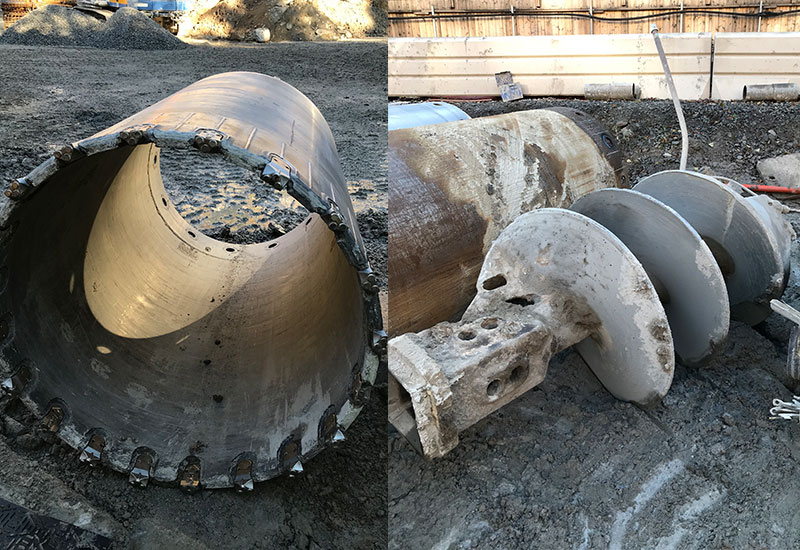
“This requires powerful machines. At the moment, we’re working with a Liebherr 36 that drives the pipes down and then drills while also extracting the soil with a screw,” Nilsson explains.
The machine, which weighs 116 tonnes, was shipped all the way from Germany to Stigbergsparken.
To ensure that the pile wall is anchored in the bedrock, the hole for each pile is pre-drilled with a different machine equipped with a rock drilling rig. The drill bit is lowered into the casing and drilling can begin.
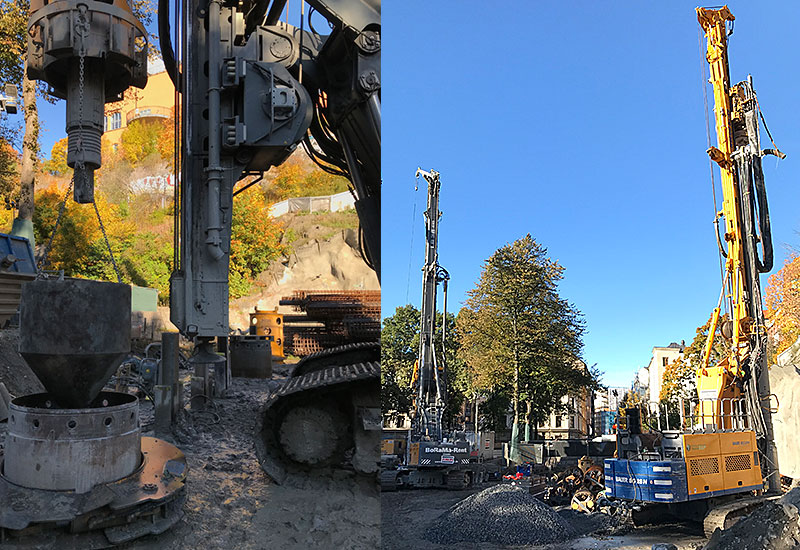
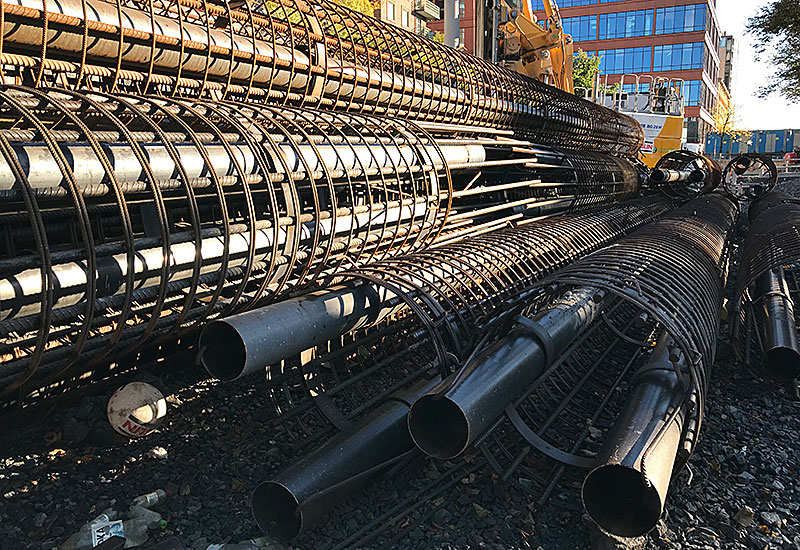
The first thing that is done is to drill holes for every other pile. Once the pile is ready for casting, it is filled with concrete. Every other pile is reinforced. This combination ensures a watertight and robust wall. While a pile is being cast, the steel pipe is lifted up and out ready for use on the next pile. Once the concrete in the hole has hardened, a stable cast-in-situ pile has been created.
Do you have any questions?
Write to Customer service or call at 08-600 10 00
News
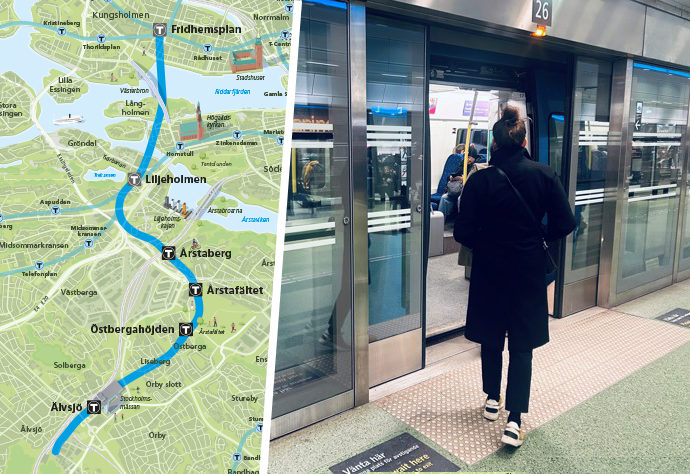 News 2025-03-21
Yes to platform screen doors on the Yellow Line
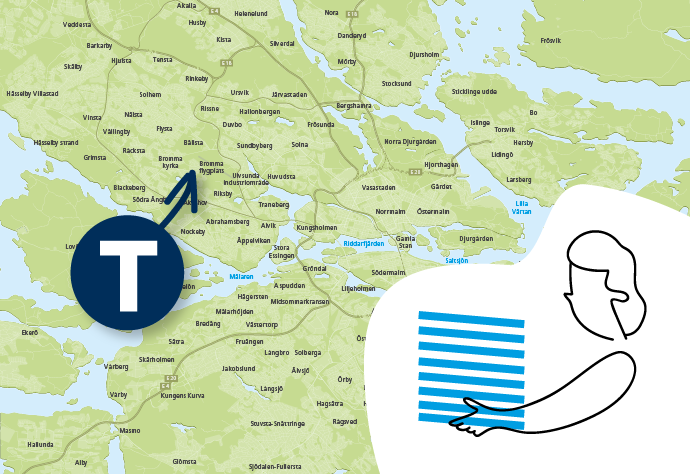 News 2024-10-10
Localization study underway for a metro to Bromma Airport area
 News 2024-01-12
Here’s where even more new metro lines might be built
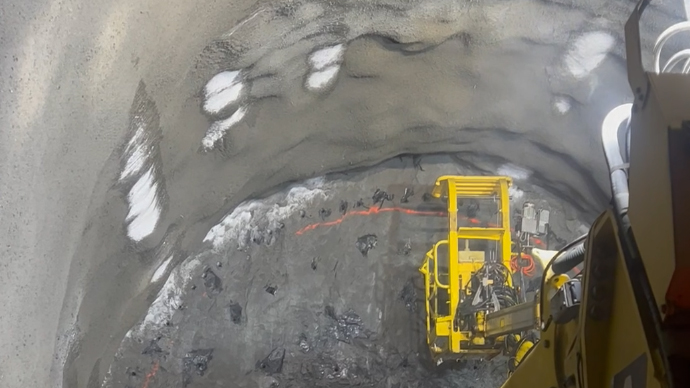 News 2023-10-12
Stone cold blasting at Gullmarsplan
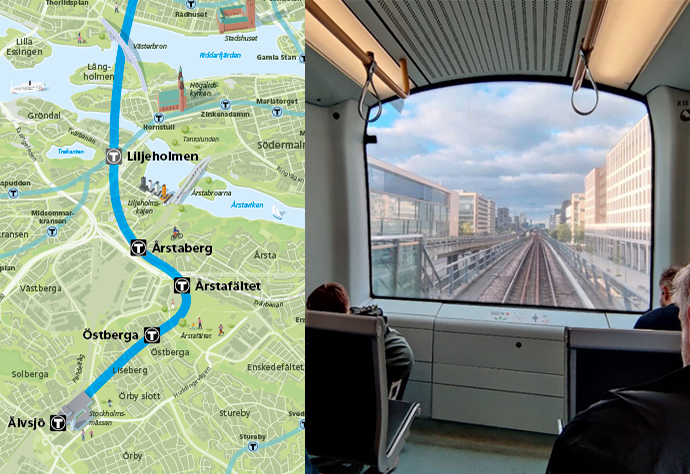 News 2023-09-27
The yellow line is planned for unattended train operation
 News 2023-09-14
Photos: Look under ground in Hökarängen
 News 2023-06-20
New video explains expanded depot
 News 2023-06-20
See the stations of the future today
 News 2023-06-20
Yellow Line moving south
 News 2023-06-20
Looking into further expansion of the metro system
 News 2023-06-19
Full speed above and under ground in Nacka
 News 2023-03-28
Underground experiments for enhanced health and safety
 News 2023-03-02
Cool tunnel works - here the rock will be frozen
 News 2023-01-30
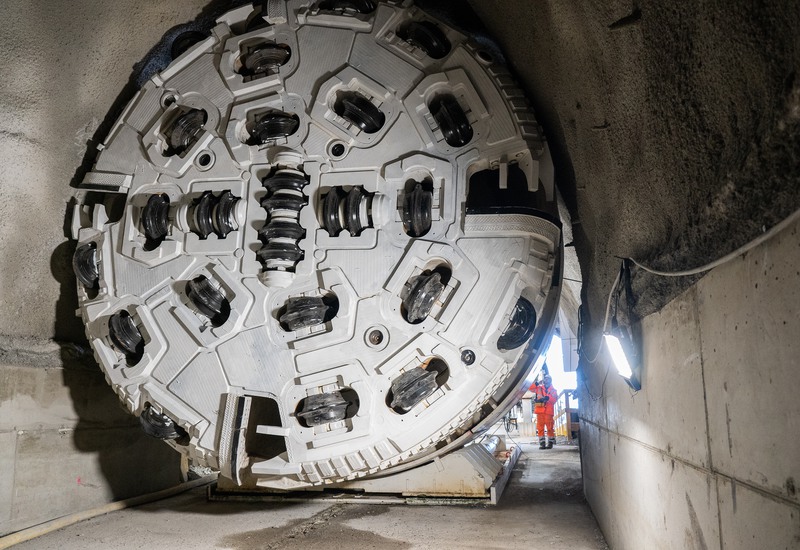
This is the first time that the metro is being built with a large drill
 News 2022-12-19
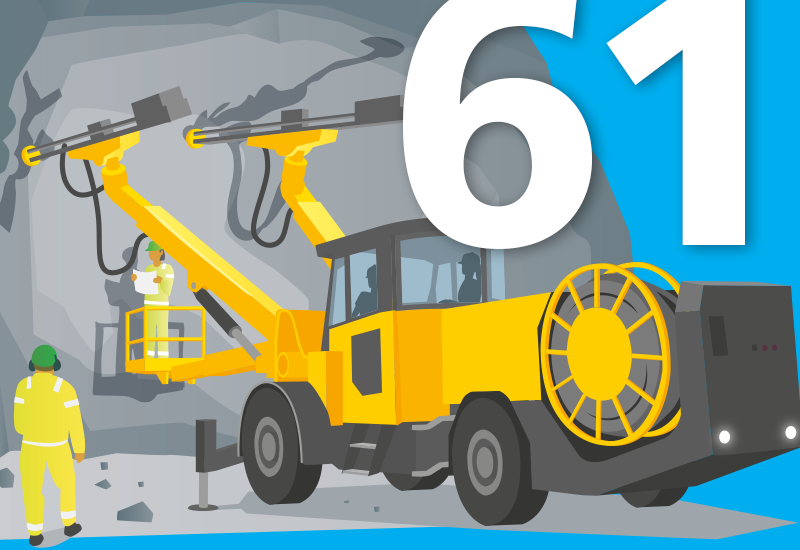
Blasting is now being performed at 61 sites simultaneously
 News 2022-12-05
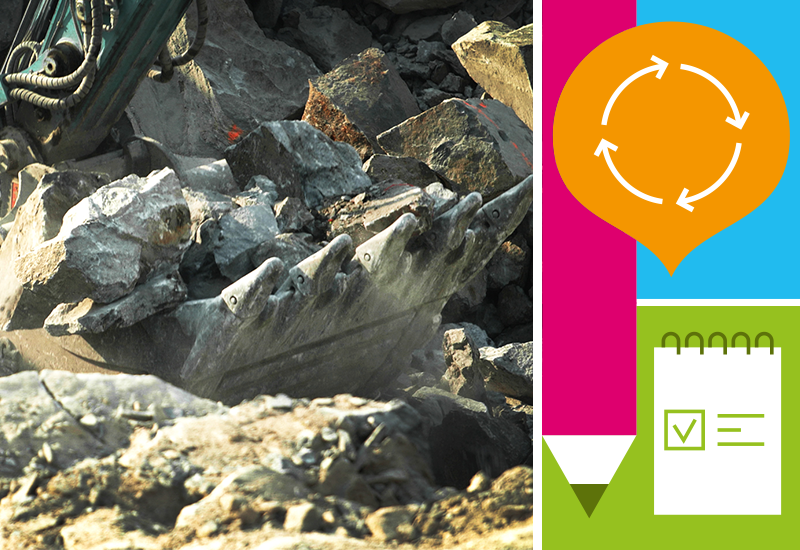
Tunnel work exceeds climate goals
 News 2022-11-17
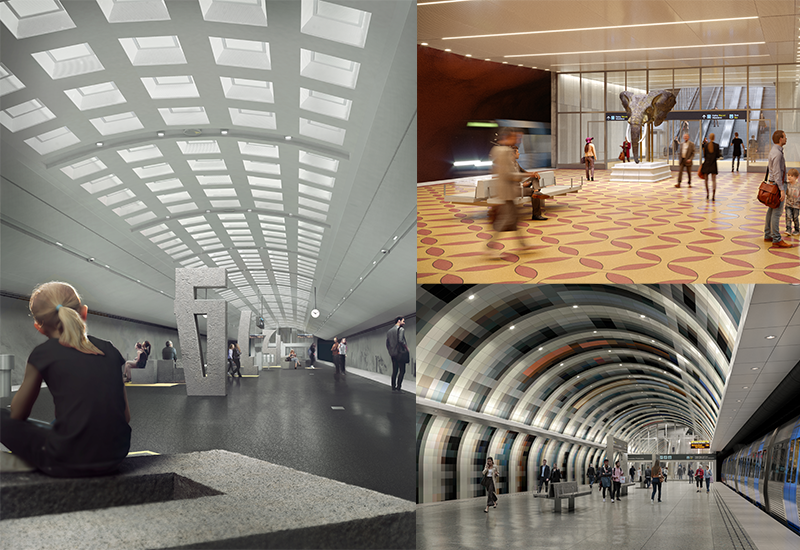
End of the line today – but maybe not tomorrow
 News 2022-10-27
A patchwork of tunnels
 News 2022-10-13
The tunnels are growing day by day – here’s everything that’s good to go
 News 2022-09-08
Turning a cavern into a new metro begins with concrete
 News 2022-09-07
Tunnels under water – how does that work?
 News 2022-08-26
The heart is key
 News 2022-06-29
New series on what’s happening under your feet
 News 2021-12-21
Check on all larger rock contracts
 News 2017-05-02
New Metro between Fridhemsplan and Älvsjö
